Loading...
Serving Twin Falls, ID and surrounding areas. (208) 544-9724
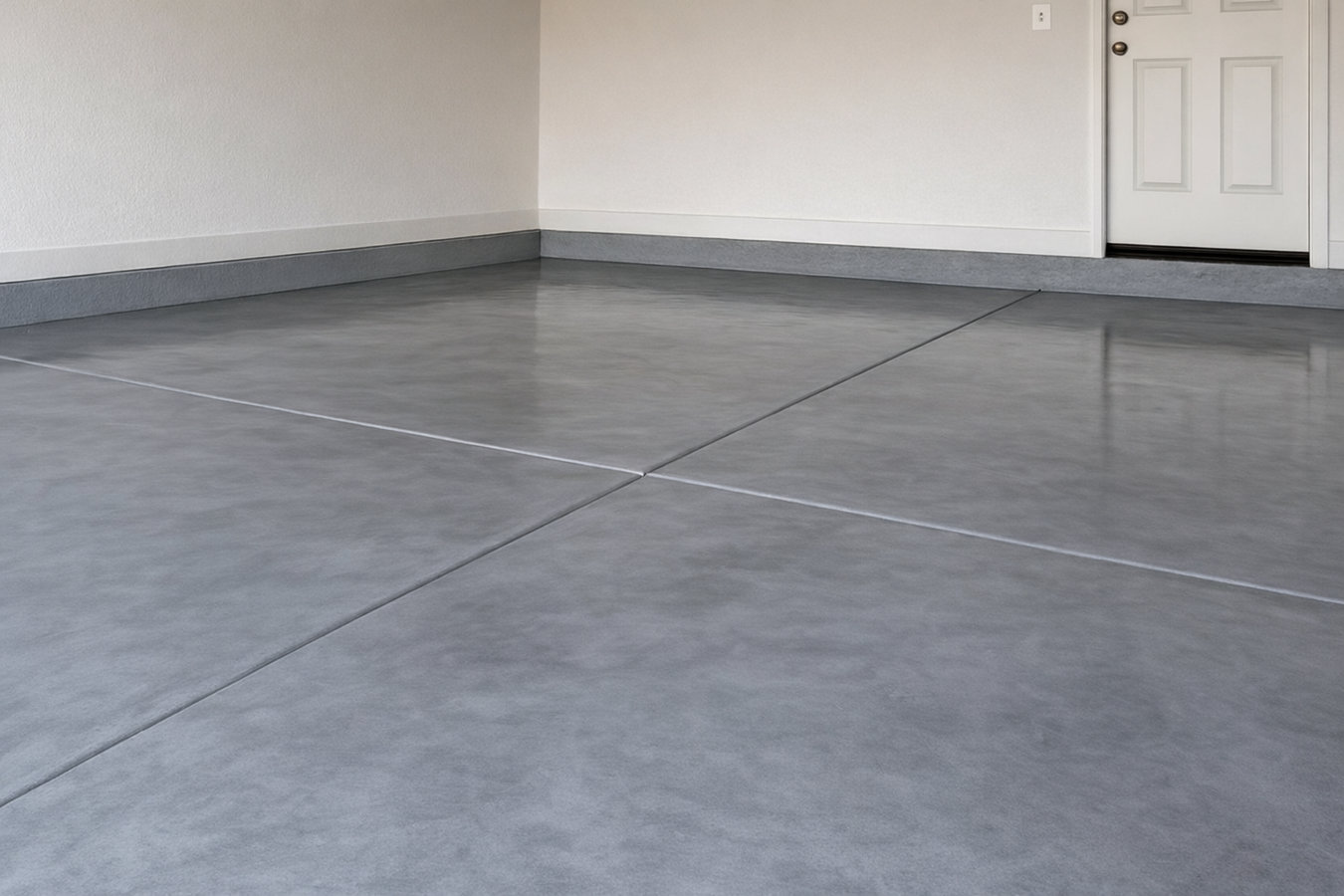
Cracked garage slabs, damp basements, and floors that settled unevenly - we install concrete floors in Twin Falls built with proper base prep and vapor barriers so they stay solid through Idaho winters.
Concrete floor installation in Twin Falls starts with clearing and grading the space, compacting a gravel base, and - for basements or ground-level slabs - laying a vapor barrier before the pour. The concrete is then mixed, poured, leveled, and finished. Most residential floors run one to three days on-site, with foot traffic possible within 24 to 48 hours and vehicle use possible after about a week.
A large share of Twin Falls homes were built between the 1950s and 1980s - and slabs from that era were often poured thinner and without modern moisture barriers. If you are replacing a floor in one of these older homes, the existing slab may need full removal rather than resurfacing. The volcanic basalt soil common beneath Twin Falls also varies in density, which means base preparation is not a step that should be rushed or skimped on.
Floor installation projects often connect naturally with concrete pool decks for outdoor slab work, or with garage floor concrete when the goal is a vehicle-ready surface with proper drainage slope.
If you have patched cracks in your garage or basement floor more than once and they keep reappearing - especially if they are widening or spreading - the slab itself may be failing. Repeated cracking often means the base underneath has shifted or was never properly prepared, and surface patching alone will not fix the underlying problem.
A chalky white film on your concrete floor - called efflorescence - is a sign that water is moving up through the slab from the soil below. This is common in older Twin Falls homes with basement slabs poured without a moisture barrier. Left alone, the moisture can damage anything stored on the floor and make the surface harder to seal or coat over time.
If water pools in certain areas after mopping or during wet weather, the floor has settled unevenly. This is more common in homes built on the volcanic soils of the Snake River Plain, where the ground beneath a slab can shift over time. Uneven floors are also a tripping hazard and make it harder to install finished flooring on top.
After a hard freeze-thaw season, concrete that was already marginal can show new surface spalling - where the top layer flakes or chips away. If your floor looks noticeably rougher or more pitted each spring, the surface has broken down enough that repairs are no longer cost-effective compared to replacement.
We install concrete floors for garages, basements, utility spaces, and additions throughout Twin Falls and the surrounding Magic Valley. Every project starts with a site visit to check the existing condition, measure the space, and assess whether the current base needs removal and full replacement or whether resurfacing is a reasonable option. We pull the City of Twin Falls building permit for all slab work that requires one, handle base preparation, and offer both standard broom-finished and decorative surface options depending on how the space will be used.
Homeowners finishing a basement or upgrading a garage often ask about pairing floor work with garage floor concrete specifically designed for vehicle loads, or connecting an interior slab with an exterior concrete pool deck for a unified outdoor entertaining surface. Coordinating these projects together often reduces overall cost and disruption.
Homeowners replacing a cracked or failing garage slab with a vehicle-ready surface built for Idaho freeze-thaw winters.
Homeowners finishing an unfinished basement or replacing an old slab that has developed moisture, cracking, or settling problems.
New construction additions that need a properly prepared slab tied into the existing structure.
Floors that are structurally sound but have surface damage - spalling, staining, or roughness - that makes them difficult to use or finish.
Homeowners who want a stained, polished, or otherwise finished concrete surface rather than a plain utilitarian slab.
Twin Falls has two conditions that directly affect how a concrete floor should be installed: volcanic basalt soil that varies in density across the region, and a freeze-thaw climate that punishes slabs poured without proper curing. The Snake River Plain beneath much of the Magic Valley means ground conditions are not uniform - a contractor doing their first Twin Falls job may not budget enough time or material for base preparation. And because the area is at roughly 3,700 feet elevation with low humidity for much of the year, freshly poured concrete can dry out on the surface before it has fully cured inside - a common cause of surface cracking that experienced local contractors prevent with wet-curing methods.
We work on floors throughout the region, including homes in Rupert and Burley where postwar housing stock creates many of the same conditions - thin original slabs, no vapor barriers, and ground that has settled differently than what the original builder planned for. Whether you are in a 1960s ranch near downtown Twin Falls or a newer build on the north side of town, we assess what is actually under your slab before we pour.
We respond within 1 business day. We will ask a few questions about your space and schedule a visit - most reputable contractors in Twin Falls want to see the area before giving a firm number.
We measure the space, check the condition of any existing floor or base, and identify anything that could affect the job - drainage, access, or ground conditions. You receive a written estimate that itemizes what is included.
For most slab work in Twin Falls, we pull the city building permit before starting. This typically takes a few business days. Spring and summer slots fill quickly - booking early gives you more flexibility on timing.
The crew prepares the base, pours and finishes the concrete, and cuts control joints. After curing - at least 24 to 48 hours before foot traffic, a week before vehicles - the city inspector signs off and we walk you through the finished floor.
Free written estimate before any work starts. No pressure, no vague quotes.
(208) 544-9724Older Twin Falls homes without moisture barriers under their slabs are common. We include a vapor barrier as a standard part of every basement and ground-level pour - not an upsell. It is the single most effective step for preventing the damp floors that drive homeowners to call us in the first place.
Twin Falls sits on volcanic basalt and soil that varies in density. We assess the existing base before every pour and bring in compacted gravel fill where the ground needs it. Skipping or rushing this step is the most common reason floors crack or settle unevenly in this region.
We pull building permits in Twin Falls and across all 12 cities we serve, from Jerome to Burley to Nampa. Permitted slab work is inspected by the city - which protects you at resale and gives you documentation that the job was done correctly.
Twin Falls summers are dry and windy, which causes concrete surfaces to dry faster than the slab cures inside. We use wet-curing methods or curing compounds during warm, dry conditions - a step recommended by the American Concrete Institute and one that separates floors that last from floors that crack in their first season.
Every floor we install is designed around what we find on your specific site. That means the right base depth for your ground conditions, the right curing approach for the time of year, and a surface finish that fits how you plan to use the space.
For technical guidance on concrete floor construction, the American Concrete Institute and the Portland Cement Association publish plain-language guides worth reading before your project.
Slip-resistant concrete pool decks designed for Twin Falls heat and the UV exposure that comes with high-elevation summers.
Learn moreGarage slabs with proper drainage slope, thickness for vehicle loads, and optional sealing for easy long-term maintenance.
Learn moreSpring and summer booking slots fill fast - reach out now so your project stays on track for the best installation season.