Loading...
Serving Twin Falls, ID and surrounding areas. (208) 544-9724
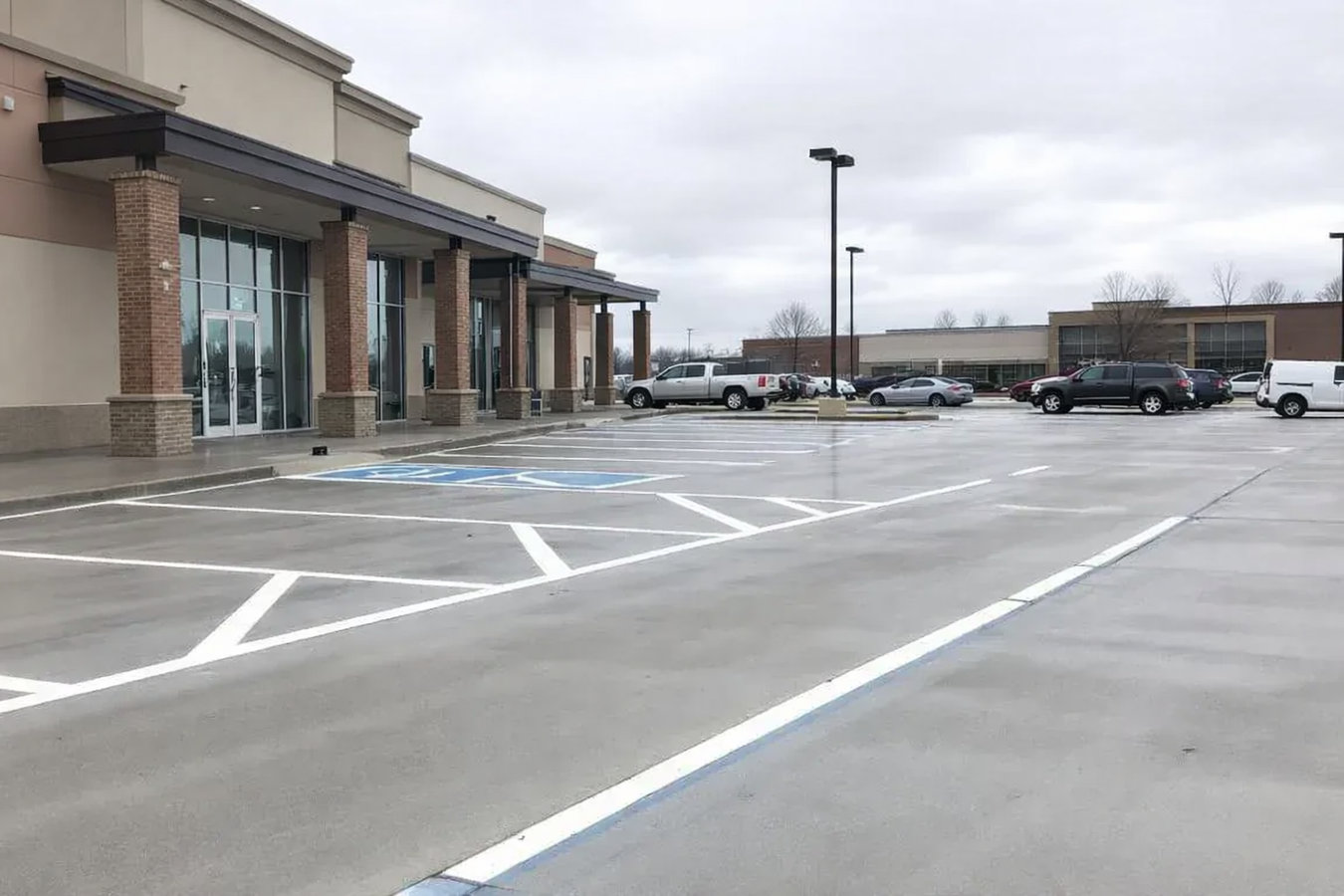
A crumbling or unpaved parking area costs you in repairs, ruts, and mud every season. We build concrete lots with proper drainage and base prep that hold up through Idaho winters for decades.
Concrete parking lot building in Twin Falls means removing the existing surface, grading the ground for drainage, compacting the soil, laying a crushed aggregate base, pouring a reinforced slab with control joints, and finishing the surface - most small to mid-size residential and commercial lots take two to five days on-site, with vehicles staying off for at least seven days while the concrete cures.
The work under the slab matters just as much as the concrete itself. Twin Falls sits at roughly 3,700 feet elevation and sees hard winters - ground that freezes and thaws repeatedly will shift beneath a slab that was not given a proper compacted base. We assess soil conditions before every pour, which is especially important in parts of the Twin Falls area where volcanic basalt and silty fill soils can behave unpredictably.
Many property owners who add a concrete lot also ask about connecting it to a concrete driveway or adding properly engineered concrete footings for light poles or canopy structures on the same project.
If your existing gravel, asphalt, or old concrete has large cracks, potholes, or sections that crumble underfoot, patching is no longer cost-effective. In Twin Falls, freeze-thaw cycles accelerate this kind of deterioration - what starts as a small crack in October can be a significant problem by March.
Standing water on a parking surface signals that drainage was never properly designed or has failed. In Twin Falls, where spring snowmelt can be heavy, pooling water seeps under the surface, freezes, and causes the ground to shift - making the problem worse every year. A new concrete lot built with proper slope solves this permanently.
Many Twin Falls properties still have unpaved areas that turn to mud in spring and create dust in summer. If vehicles are rutting the surface or you are tracking gravel into your building, a concrete lot is a permanent fix that adds real value to the property.
If sections of your current surface have heaved, settled, or tilted - common in Twin Falls due to soil movement and frost - you may have a tripping hazard or a surface that damages vehicles. Uneven surfaces get worse over time, not better. Have a contractor assess whether repair or replacement makes more sense.
We handle concrete parking lot projects for homeowners, small business owners, and property managers across the Twin Falls area. Every job starts with a site visit - we look at the existing surface, assess the soil, and walk through drainage options before giving you a written estimate. We handle permit applications with the City of Twin Falls and design the drainage slope into the project from the start, not as an afterthought. Standard broom-finished lots are the most common request, but we also build exposed aggregate and textured finishes for properties where appearance matters.
Several clients combine lot work with a new concrete driveway to unify the paved surface across the property, or include concrete footings for light poles or overhead structures as part of the same pour schedule. Combining work keeps mobilization costs down and means the property is disrupted once rather than twice.
Properties converting unpaved gravel or dirt areas to a permanent, low-maintenance concrete surface.
Businesses or homeowners who need more vehicles or equipment space than the current surface allows.
Aging asphalt or cracked concrete lots where patching no longer makes economic sense.
Business and rental property owners who need a permit-ready design that meets Twin Falls stormwater requirements.
Properties where curb appeal matters and a standard broom finish is not enough.
Twin Falls winters are genuinely hard on concrete that was not built for this climate. Temperatures regularly dip below freezing from November through March, and the repeated freeze-thaw cycle is the primary reason parking surfaces crack and heave faster in southern Idaho than in warmer states. Building a lot here that lasts 30 years means designing drainage that keeps water from sitting under the slab, using a base thick enough to handle ground movement, and cutting control joints at the right spacing so any cracking stays controlled. Summer construction brings the opposite problem: the combination of heat and low humidity can dry fresh concrete too fast, weakening the finished surface if the crew does not take steps to slow evaporation during curing.
We work on lots throughout the region - from commercial properties in Burley to residential parking pads in Jerome. Whether your site sits on the firm basalt common near the canyon rim or on the looser silty soils found in some of the older and newer subdivisions, we evaluate actual ground conditions before finalizing any design or price.
We respond within 1 business day. You will speak with someone who can answer questions and schedule a site visit - not a call center. No commitment required to get a quote.
We visit your property, assess soil and drainage, and walk through the scope with you. You receive a written estimate covering preparation, materials, and finishing - no vague totals.
We handle the City of Twin Falls permit application. Prep work - removing the old surface, grading, and compacting the base - usually takes one to two days and is the most critical phase of the job.
The concrete pour typically happens in a single day. After at least seven days of curing, we walk the finished lot with you, confirm drainage is working as designed, and answer any questions about maintenance.
We respond within 1 business day. Written estimates only - no verbal ballparks that change once work starts.
(208) 544-9724A flat parking lot is actually a problem - water needs somewhere to go. We build the correct slope into every pour so rain and snowmelt drain away from your building. Twin Falls spring snowmelt can be significant, and poor drainage is the most common reason concrete lots fail early.
We manage the City of Twin Falls permit application as part of every qualifying project. That means the work is inspected, documented, and on record - which protects you when you sell, refinance, or make an insurance claim. Contractors who skip this step are putting your liability on the line.
Magic Valley sees genuine cold - temperatures in the teens overnight for months - and that freeze-thaw cycle destroys concrete that was not engineered for it. We use base depths, slab thickness, and control joint spacing specific to this climate, not national averages. For guidance on concrete mix standards for cold climates, the American Concrete Institute publishes free technical resources.
Every lot we price gets a written estimate that breaks down preparation, base material, concrete, drainage, and finishing before we touch your property. Twelve service areas across the Magic Valley - from Buhl to Pocatello - mean we understand regional material and labor costs well enough to price honestly from the start.
A concrete lot is a significant investment, and the decisions made before the pour - drainage slope, base thickness, control joint spacing - are invisible once the concrete sets. We build those decisions into every job because they are what determine whether your lot looks the same in 15 years as it does today.
If your lot expansion requires new footings for a canopy, light poles, or perimeter walls, we handle those structural pours alongside your lot build.
Learn moreResidential driveways built with the same base preparation and control joint spacing as our commercial lot work.
Learn moreGood contractors book up fast once the weather cooperates - reach out now to lock in your project before the summer schedule fills.